

Lightweight Summer Tactical T‑Shirts: Functional Fabric Guide & Bulk Custom Sourcing Tips
August 17, 2026
During a summer field exercise, outdoor work shift, or extended equipment-based assignment, the wearer may experience heat accumulation from physical activity, solar exposure, and limited air circulation between the body and clothing. A tactical T-shirt must therefore address three separate performance factors: heat dissipation, liquid-moisture transport, and mechanical durability. Lightweight construction can reduce garment weight, but it does not automatically ensure breathability or comfort. These properties depend on fiber selection, yarn structure, knit density, fabric finishing, and ventilation design.
For B2B buyers, the term “tactical” describes a product’s intended use and functional design. It does not automatically indicate protective performance. The product should be evaluated according to its actual application, whether that involves field training, outdoor work, security uniforms, logistics, travel, or everyday active wear.
Lightweight Does Not Simply Mean Thin
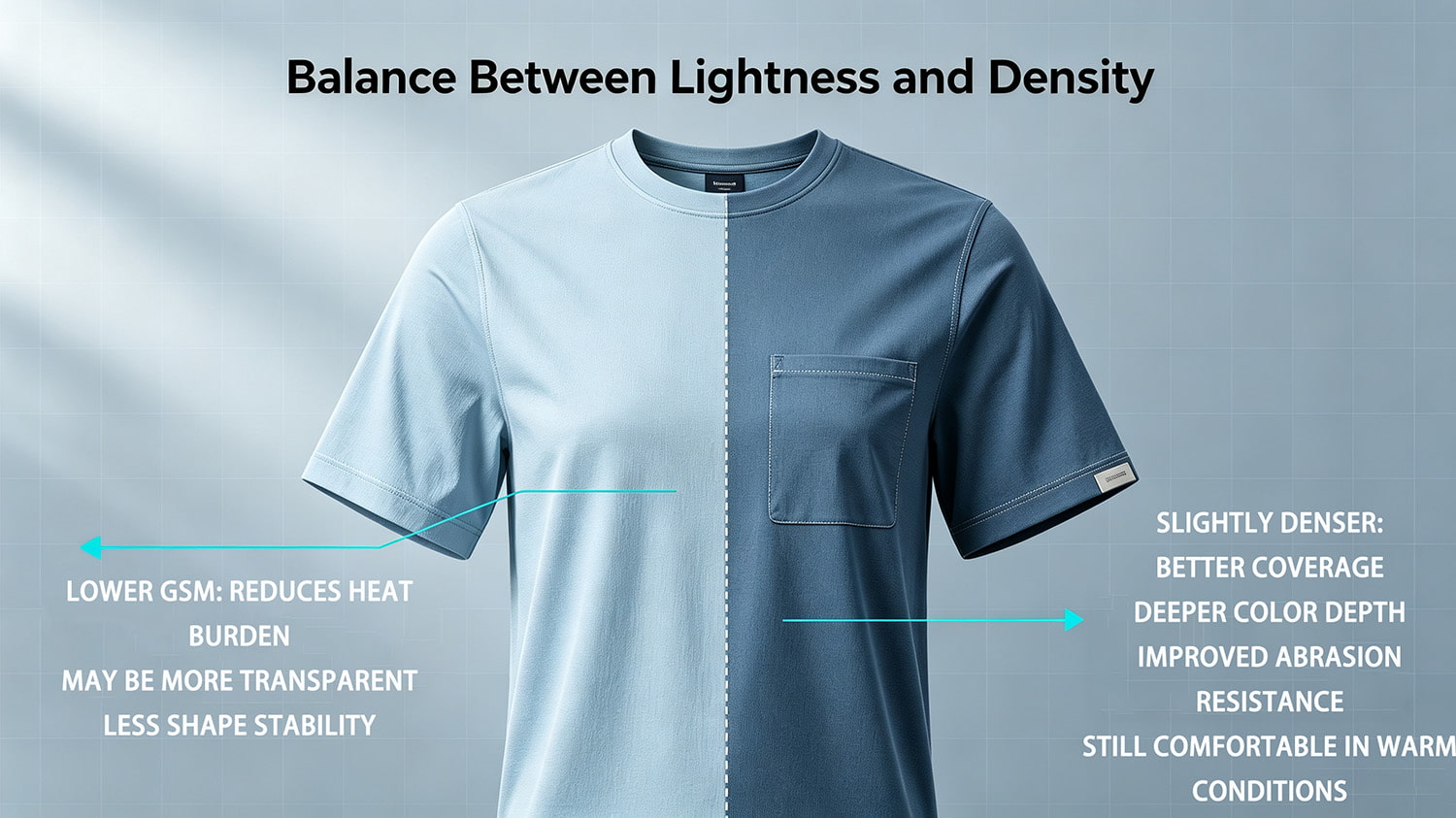
Fabric weight is commonly measured in GSM, or grams per square meter. GSM affects the total garment weight, drape, opacity, and potential durability, but it should not be considered a complete measure of summer comfort. Two fabrics with similar GSM can feel very different because of differences in thickness, yarn count, knit density, surface finish, and air permeability.
A very low-GSM fabric may reduce heat burden, but it can also become too transparent, lose shape more easily, or show greater wear around pockets and seams. A slightly denser fabric may provide better coverage, color depth, and abrasion resistance while still remaining comfortable in warm conditions.
When comparing fabrics, buyers should request actual composition, GSM, thickness, air permeability, stretch recovery, pilling resistance, dimensional stability, and colorfastness data. Product images and general descriptions cannot verify these properties.
Functional Fabric Options
Polyester is widely used in summer performance apparel because it offers good color retention, dimensional stability, and production consistency. However, polyester fiber alone does not guarantee moisture-wicking performance. Liquid movement depends on yarn geometry, capillary channels, knit construction, and any applied finishing.
Nylon can provide a smoother hand feel and strong abrasion resistance. It may be suitable for garments exposed to shoulder straps, equipment contact, or repeated friction. Its higher material cost should be balanced against the intended service life and market positioning.
Polyester-cotton blends can improve softness and everyday comfort, but cotton generally retains more moisture than synthetic fibers and may take longer to dry during continuous activity. These blends may be more appropriate for lower-intensity work or uniform programs where natural hand feel is more important than maximum moisture transport.
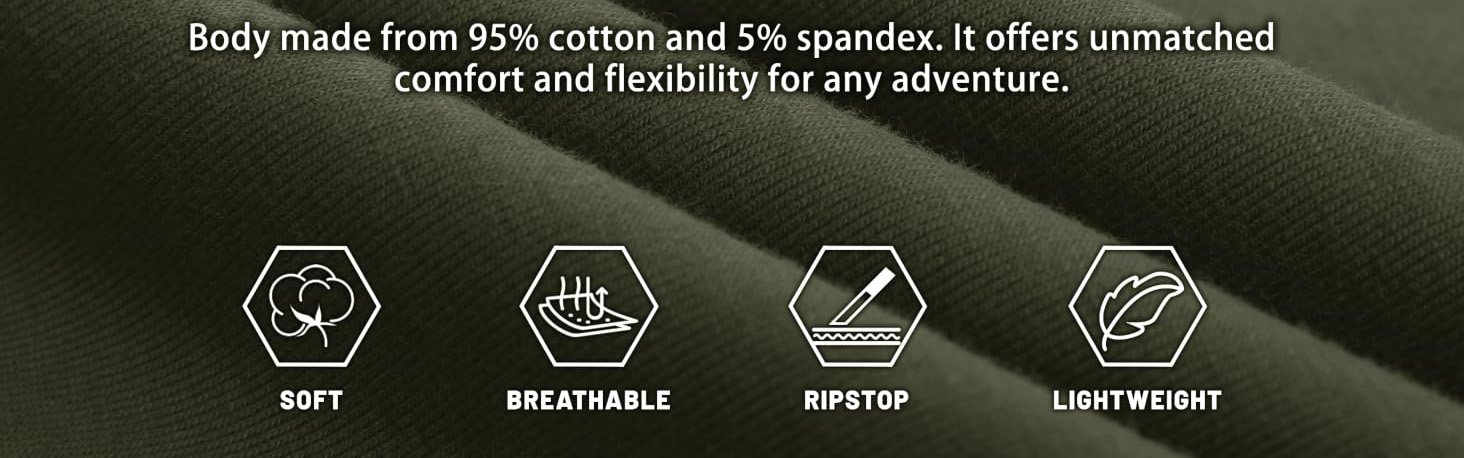
A small amount of elastane can improve stretch and range of motion. The key factor is not simply the presence of stretch, but whether the fabric recovers its original shape after repeated extension. Excessive stretch can affect garment stability, printing quality, and long-term appearance, so stretch recovery should be evaluated after washing.
Breathability and Moisture Management
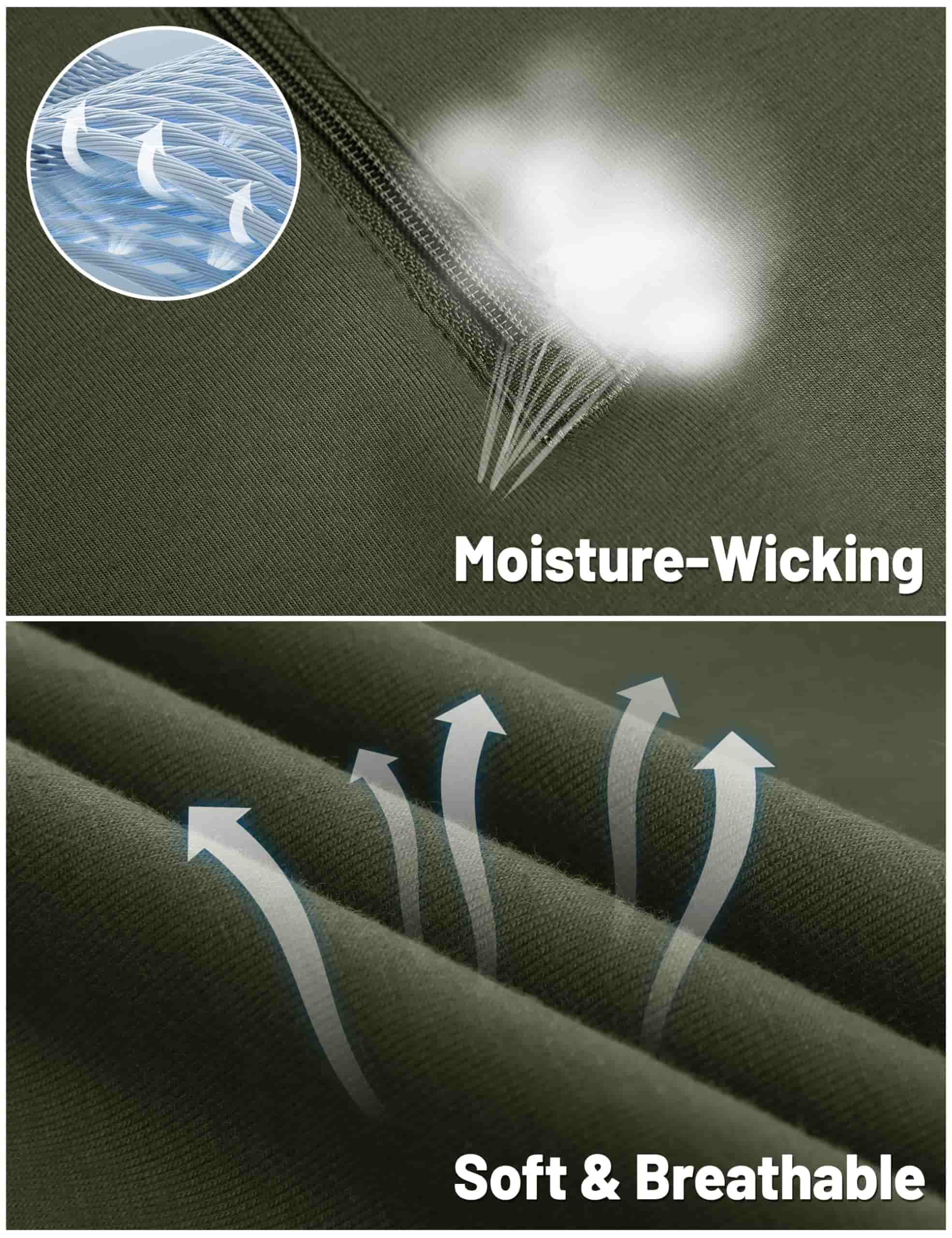
Breathability and moisture management are related but different properties. Air permeability describes how easily air passes through the fabric. Moisture management describes how liquid spreads, moves, and evaporates across or away from the skin.
A fabric may have high air permeability but poor liquid spreading, or strong moisture-spreading performance but limited air exchange. For this reason, buyers should evaluate both properties instead of relying on a single “breathable” claim.
Mesh panels and engineered ventilation zones can improve airflow around the underarms, sides, or upper back. However, a more open structure may reduce snag resistance, opacity, or protection from equipment friction. The best construction depends on the activity level and working environment.
A useful development sample should be checked for air permeability, absorbency, spreading, drying behavior, and performance after repeated washing. Moisture-management finishes should also be tested after laundering because surface treatments may lose effectiveness over time.
Fit and Mobility for Tactical Use
Tactical T-shirts are often worn during reaching, lifting, bending, walking, or repeated upper-body movement. A comfortable fit should provide sufficient room across the shoulders and chest without creating excessive fabric around equipment or harnesses.
Important fit points include shoulder width, armhole shape, sleeve length, back length, torso ease, and hem recovery. A garment that fits well while standing may pull across the back when the wearer reaches forward. Full-size-set fitting is therefore more reliable than approving only one sample size.
Sleeve openings should allow arm movement without excessive tightness. A slightly extended back length can improve coverage during bending, but too much length may cause bunching under waist equipment. Side vents, shaped hems, or stretch panels may help mobility, but each added feature should be evaluated for appearance, durability, and production consistency.
Construction and Functional Details
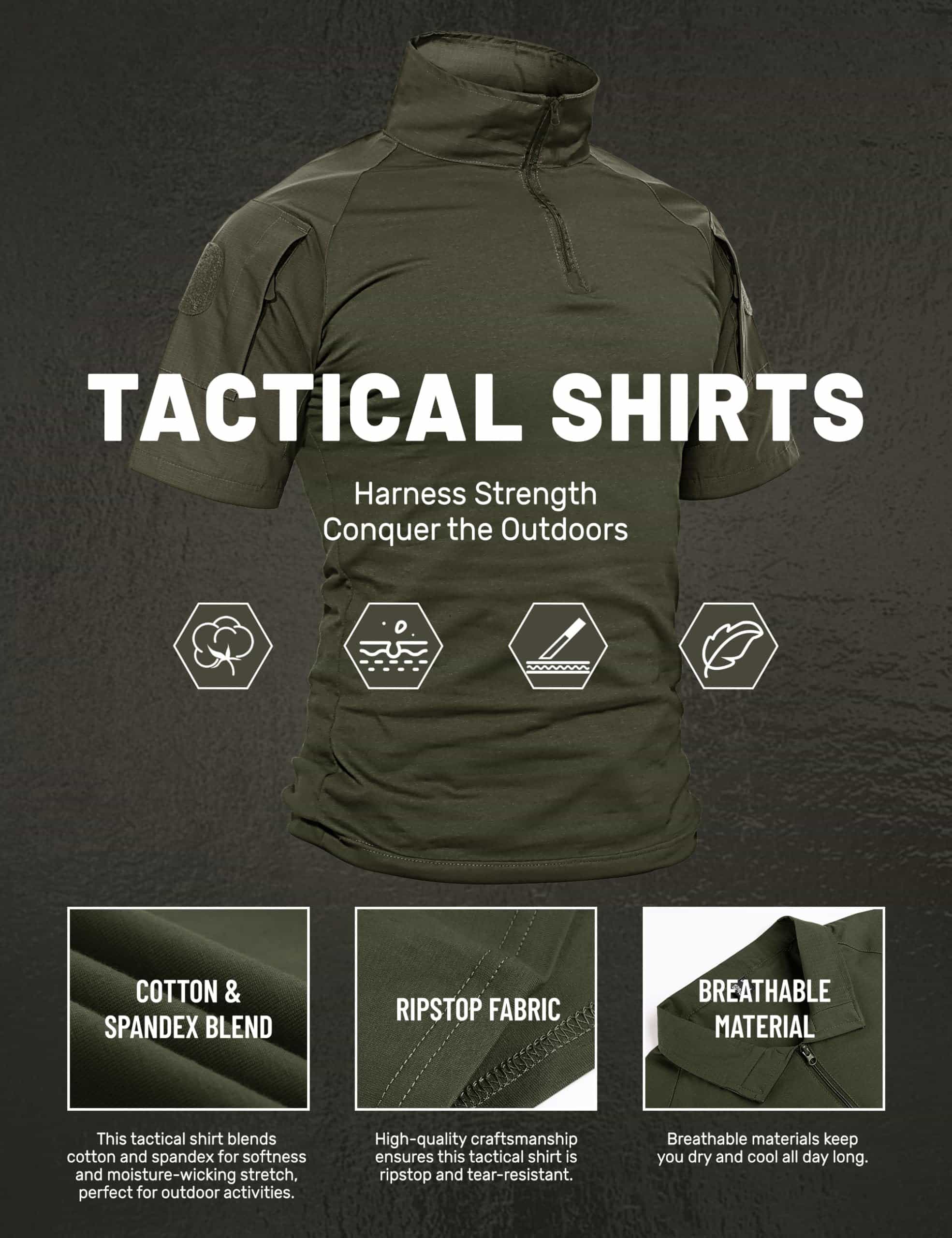
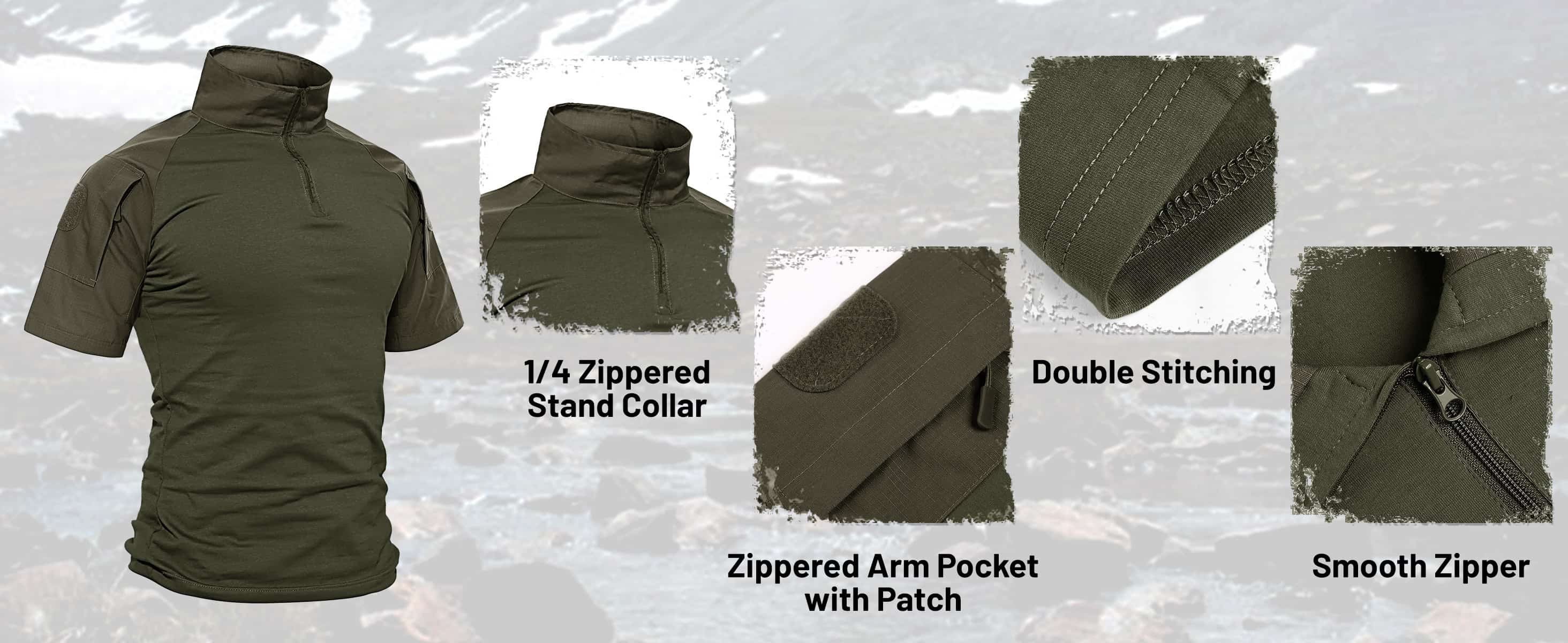
The collar is one of the first areas to show wear. Buyers should check collar width, rib structure, recovery, seam smoothness, and resistance to twisting after washing. A stable collar improves the professional appearance of uniforms and reduces early replacement.
Shoulder seams, side seams, underarm areas, and pocket openings usually experience higher stress than the main body fabric. Reinforcement may improve durability, but excessive layers can add heat and stiffness. Stitch density, seam allowance, bartacks, and thread selection should match the fabric weight and intended use.
Functional details may include chest pockets, pen channels, loop panels, patch areas, or secure closures. These features should be selected according to actual equipment needs. Additional pockets can increase weight and create heat retention, while oversized hook-and-loop panels may affect comfort when worn under outer layers.
Decoration also influences product performance. Embroidery can create stiffness or puckering on lightweight knits. Heat transfers may crack or peel if the fabric stretches beyond the decoration’s limits. Screen printing may require testing for color migration, wash durability, and surface smoothness.
Choosing the Right Product by Use Scenario
| Use scenario | Main priorities | Suitable product direction |
| Hot and humid outdoor work | Air permeability, moisture spreading, quick evaporation, wash stability | Lightweight knit with controlled ventilation |
| Field training and equipment use | Stretch recovery, abrasion resistance, shoulder stability, mobility | Resilient fabric with reinforced stress points and secure functional details |
| Daily work uniforms | Opacity, colorfastness, pilling resistance, collar recovery | Balanced fabric with a clean surface and reliable wash performance |
| Travel and everyday active wear | Soft hand feel, low bulk, easy care, shape retention | Comfortable lightweight fabric with moderate stretch and minimal hardware |
In hot and humid climates, moisture transport and airflow should receive more attention than fabric softness alone. For field training, abrasion resistance and recovery may be more important than achieving the lowest possible GSM. For uniform programs, color consistency, collar stability, and wash durability often have a greater effect on product satisfaction.
How to Compare Samples Before Ordering
Before approving a product, buyers should compare samples using the same evaluation criteria. The following questions are more useful than judging appearance alone:
-
Does the actual fabric composition and GSM match the specification?
-
Does the fabric remain opaque under normal lighting?
-
Does the garment allow full arm and shoulder movement?
-
Does the collar recover after stretching and washing?
-
Do the seams remain flat without skipped stitches or excessive thread tension?
-
Does the fabric resist pilling, snagging, shrinkage, and twisting?
-
Does the decoration remain smooth and secure after laundering?
-
Are pockets, loops, and reinforcement points positioned for the intended equipment?
-
Does the garment maintain its color and shape after repeated care cycles?
For bulk custom programs, the approved reference sample should include the final fabric, color, labels, trims, decoration, measurements, and packaging details. This creates a consistent product standard for future production and repeat orders.
Final Thoughts
A high-quality lightweight summer tactical T-shirt is not defined by low fabric weight alone. Its performance results from the interaction between fiber content, yarn structure, knit density, moisture management, garment fit, ventilation, seam construction, and functional details.
The most suitable product is the one that matches the actual use scenario and provides measurable performance after washing and repeated wear. By comparing fabric data, testing complete garments, and checking practical features, B2B buyers can choose a summer tactical T-shirt that combines comfort, mobility, durability, and reliable customization potential.
Lasen is a manufacturer specializing in men's apparel with a decade of experience. Every garment undergoes rigorous quality inspections, and we partner with over 80 fabric suppliers to ensure our products meet your specifications. If you are interested in tactical T-shirts, please feel free to contact us.