Full Custom Sunscreen T-shirt: From Fabric Selection to Cut‑Sew for Private Label Brands
Aug 21, 2026
Imagine a private label brand preparing a summer collection for coastal travel, hiking, outdoor work, and recreational swimming. The goal is not simply to source another long-sleeve T-shirt. The product must feel lightweight, protect the wearer from sunlight, dry efficiently, fit consistently, and carry a distinctive brand identity.
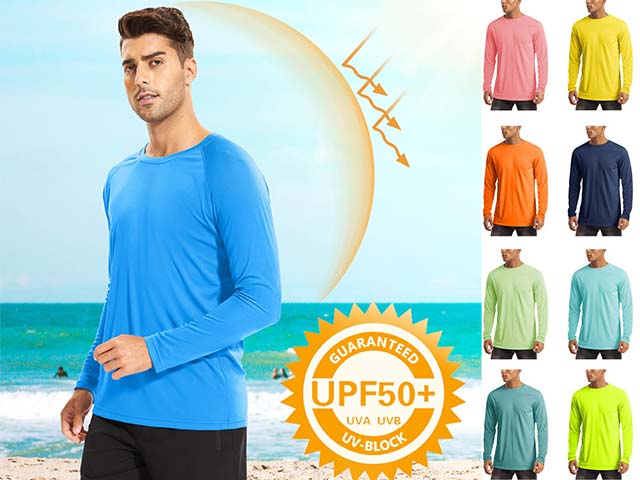
This is where a full custom sunscreen T-shirt becomes valuable. A custom sun protection shirt can be developed as a UPF 50+ performance tee, lightweight UV protection top, quick-drying outdoor T-shirt, swim cover shirt, hiking base layer, or branded activewear shirt. Each description should match the actual construction and verified performance.
Start with the Correct Sun Protection Standard
Many retail listings use phrases such as “UV SPF shirt” or “sunscreen T-shirt.” However, SPF is primarily used for sunscreen products applied to skin. Apparel is generally evaluated using UPF, or Ultraviolet Protection Factor.
For a technical pack, buyers should specify the intended UPF level, testing method, fabric condition, color range, and whether testing is required before or after washing. Common testing references may include AATCC 183, AS/NZS 4399, and EN 13758-1, depending on the target market.
A UPF claim should not be based only on a fabric supplier’s marketing description. Fabric weight, color, knit density, stretching, moisture, seams, and decoration can all affect the final garment’s protection. The finished long-sleeve sun shirt should therefore be tested in its actual production construction.
Choose the Right Fabric for the Product Positioning
Polyester microfiber is a common option for a lightweight quick-dry T-shirt. It can offer a good balance of cost, color flexibility, moisture management, and production efficiency. It is suitable for hiking shirts, running tops, outdoor work shirts, and general summer activewear.
Nylon is often selected when a softer hand feel, smoother surface, or improved abrasion resistance is important. It can create a more premium-feeling UV protection shirt, although the material cost may be higher. Nylon-spandex blends can provide a comfortable stretch fit for movement-based products.
Spandex improves stretch and mobility, but the percentage should be carefully controlled. Excessive stretch can affect dimensional stability, UPF performance, and recovery after repeated wear. Buyers should request stretch-recovery and wash-durability data instead of choosing a fabric only by touch.
Recycled polyester may support a sustainability story for a private label apparel collection. In that case, the buyer should also verify fiber-content documentation, recycled-material certification, traceability, and consistency between sample and bulk production.
Match Fabric Construction to End Use
A lightweight jersey knit can create a soft, flexible, everyday T-shirt silhouette. Interlock fabric may provide a more stable surface and better opacity. Mesh or engineered ventilation panels can improve airflow in selected areas, but they may also create differences in appearance, stretch, and sun protection.
For a swim-related cover shirt, the fabric should be evaluated for chlorine, saltwater, sunscreen residue, and repeated wet use. For hiking and workwear applications, abrasion resistance, pilling, colorfastness, and seam performance may be more important.
The ideal custom T-shirt fabric is not necessarily the thinnest or softest option. It must balance opacity, breathability, moisture movement, stretch, drying speed, comfort, and durability.
Build the Custom T-shirt through the Pattern
Full customization begins with the silhouette. A brand may choose a close athletic fit, a standard crew-neck T-shirt fit, or a relaxed outdoor shirt shape. The correct choice depends on whether the garment is worn next to the skin, over swimwear, or as a casual layering piece.
The technical pack should define chest width, shoulder width, body length, sleeve length, bicep width, cuff opening, neck opening, and measurement tolerances for every size. If the fabric contains stretch, the specification should clarify whether measurements are taken in a relaxed or extended state.
Common design directions include:
Classic crew-neck long-sleeve T-shirt
Mock-neck UV protection shirt
Raglan-sleeve outdoor performance tee
Thumb-hole hiking shirt
Relaxed swim cover T-shirt
Slim-fit running base layer
Color-blocked private label activewear top
Neck construction also affects both comfort and perceived quality. Options may include a self-fabric neckband, binding, shoulder tape, mock-neck collar, or heat-transfer neck label. For garments worn during active movement, soft seams and stable neck openings can reduce irritation.
Pay Attention to Cut-Sew Details
Cutting quality influences the appearance of the entire garment. The factory should control fabric grain, stretch direction, panel matching, notch accuracy, and cutting-layer consistency. Poor control can result in twisted sleeves, uneven side seams, or inconsistent body measurements.
Set-in sleeves offer a familiar T-shirt appearance, while raglan sleeves can create a more athletic visual effect and support easier movement. Underarm panels or gussets may be added for specific performance designs.
Flatlock seams can reduce bulk in selected areas, but they require accurate machine settings and suitable thread tension. Coverstitching, binding, bartacks, cuff construction, and hem width should all be included in the construction specification rather than left to informal interpretation.
Select Decoration According to the Fabric
Branding is an important part of a full custom T-shirt project. Possible options include screen printing, heat-transfer graphics, sublimation, reflective details, silicone logos, woven labels, embroidered marks, and printed care labels.
Sublimation may be suitable for certain synthetic fabrics and all-over graphic concepts. Heat transfers can create clean logos, but their adhesion, stretch behavior, and wash resistance should be tested. Embroidery can provide a premium appearance, although dense embroidery may add weight or stiffness to a lightweight performance shirt.
The buyer should approve decoration through a physical sample. Important checkpoints include color accuracy, edge definition, cracking, peeling, puckering, hand feel, stretch recovery, and wash appearance
Verify Performance Before Bulk Production
A professional supplier should provide a testing plan that matches the product’s intended use. Depending on the collection, buyers may request:
Fiber composition and fabric weight
UPF performance
Air permeability
Moisture-wicking and drying performance
Stretch and recovery
Pilling resistance
Dimensional stability after washing
Colorfastness to washing, perspiration, and light
Seam strength and seam slippage
Print or transfer adhesion
Chlorine and saltwater resistance for swim-related products
UPF should be checked on the finished garment or representative finished construction whenever possible. A lab report for greige fabric or an unrelated fabric color cannot automatically confirm the performance of the final branded shirt.
Use a Controlled Sample-Approval Process
A reliable private label T-shirt project normally moves through several approval stages. The first prototype confirms the basic pattern and construction. A fabric and color sample confirms the material direction. A size set checks grading and fits across the full range. A pre-production sample confirms that the approved details can be reproduced before bulk cutting.
Buyers should compare samples against a written checklist covering fabric hand feel, weight, color, measurements, neck shape, sleeve balance, seam appearance, logo placement, label details, packaging, and wash results.
The pre-production sample should be treated as the production reference. Any change to fabric lot, dyeing, pattern, trim, decoration, or sewing method should be documented and approved.
Control Cost through Total Value
The lowest unit price does not always create the lowest total cost. A cheap fabric may cause opacity issues, poor recovery, pilling, shade variation, or failed performance testing. An inexpensive decoration method may increase returns if it cracks after washing.
Total cost should include fabric development, laboratory testing, pattern development, sampling, grading, trims, decoration, packaging, inspection, defect allowance, freight, and potential reorder costs. For private label brands, consistent reorders are often more valuable than a small saving on the first order.
Why Lasen Can Support Full Custom T-shirt Production
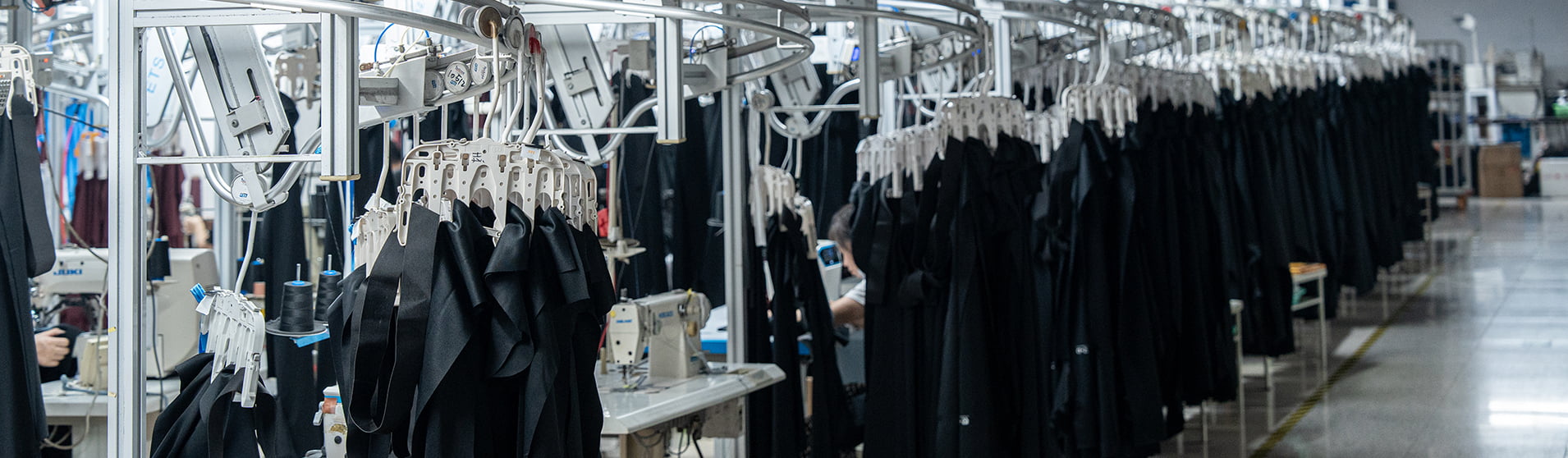
For private label brands looking for an experienced full-custom T-shirt manufacturing partner, Lasen specializes in developing and producing customized T-shirts from fabric selection and design development through pattern making, cut-sew production, decoration, quality control, and packaging.
Lasen operates three self-owned factories and has a design team of more than 300 designers. Supported by advanced garment production technology and an integrated manufacturing system, Lasen can help brands develop custom sunscreen T-shirts, UPF 50+ long-sleeve shirts, lightweight UV protection tops, quick-drying outdoor tees, swim cover shirts, and other private label activewear products. Brands can work with Lasen to turn a product concept into a tested, branded, and production-ready T-shirt collection.
Read More